Beyond the APY Illusion: Building Sustainable Returns with Concrete
 Eugshu4 min read·Just now
--
DeFi made yield easy to see, but it made it much harder to understand.
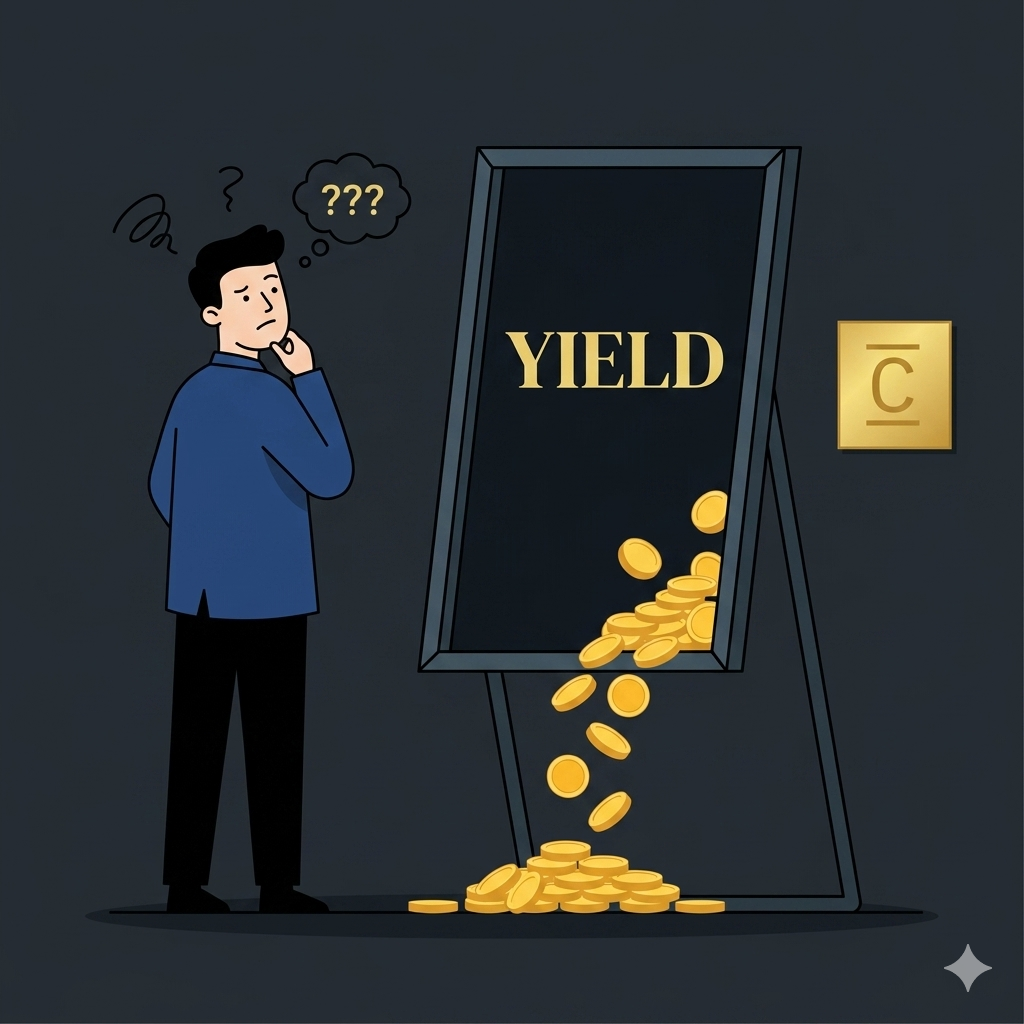
Today, entering the world of decentralized finance feels like walking into a casino where every machine claims you’re already a winner. Dashboards flash neon-green numbers, APYs update in real-time, and returns appear to compound with a single click.
The process is deceptively simple: Deposit → Earn.
Most users are lured by the high APYs on their screens, rarely stopping to ask the most important question: Where is that yield actually coming from?
Yield looks simple on the surface, but the reality underneath is often a complex web of risk and hidden costs. In markets, if you don’t understand the source of your return — you’re often the one providing it.
The Gap Between Displayed and Real Yield
The number you see on a dashboard is rarely the number that ends up in your wallet. There is a massive gap between Displayed Yield and Real Yield.
When you chase a high APY, you are often ignoring the silent “yield killers”:
- Impermanent Loss: The price divergence that can eat your entire profit in a liquidity pool.
- Rebalancing Costs: Gas fees and execution friction that chip away at your principal.
- Gross vs. Net Return: The difference between what the protocol generates and what you keep after fees and inflation.
- Volatility Impact: A 50% APY means nothing if the underlying asset drops 70% in value.
When these factors are considered, a “juicy” 40% APY can quickly compress to a net loss.
Where Does Yield Actually Come From?
Not all yield is created equal. To survive in DeFi, you must distinguish between sustainable revenue and temporary incentives. Real yield typically originates from:
- Trading Fees: Users paying to swap assets.
- Lending Activity: Borrowers paying interest to access capital.
- Arbitrage & Liquidations: Profit generated from maintaining market efficiency.
- Incentives/Emissions: “Printed” tokens used to attract liquidity (often temporary and dilutive).
If the yield comes from fees and interest, it’s revenue. If it comes solely from printing new tokens, it’s a subsidy — and subsidies eventually run out.
The Hidden Value Transfer
This is where the title comes to life. If you are providing liquidity without understanding the risk, or earning incentives while absorbing all the downside, you aren’t just a “user.” You are a subsidy for more sophisticated players.
Professional actors model outcomes before deploying a single dollar. If you are participating without a model, you are likely the one providing the “exit liquidity” or the “cheap insurance” that the rest of the market relies on.
The Shift Toward Yield Engineering
The era of blind “yield chasing” is ending. DeFi is evolving toward Yield Engineering.
The difference in outcomes between a retail user and an institution isn’t just the size of their capital — it’s their understanding of structure. Yield engineering means:
- Modeling expected outcomes instead of hoping for the best.
- Strictly managing risk parameters.
- Focusing on net returns after all costs.
How Concrete Vaults Bridge the Gap
This is where the infrastructure of Concrete becomes essential. Most users don’t have the time to manually rebalance positions or calculate complex risk models every hour.
Concrete Vaults are designed to move users from guessing to structured exposure. By using Concrete, you leverage infrastructure that can:
- Automate Allocation: Moving capital to where it is most efficient.
- Manage Strategies: Executing complex moves that would be too costly for individuals.
- Reduce Manual Errors: Removing the “human fatigue” factor from DeFi.
Instead of being the yield for someone else, you use automated, engineered strategies to capture it.
The Core Insight
Yield is not just a magic number on a screen. It is Revenue, minus Cost, adjusted for Risk.
Understanding this fundamental equation changes how you approach DeFi entirely. Stop looking for the highest number; start looking for the most sustainable structure.
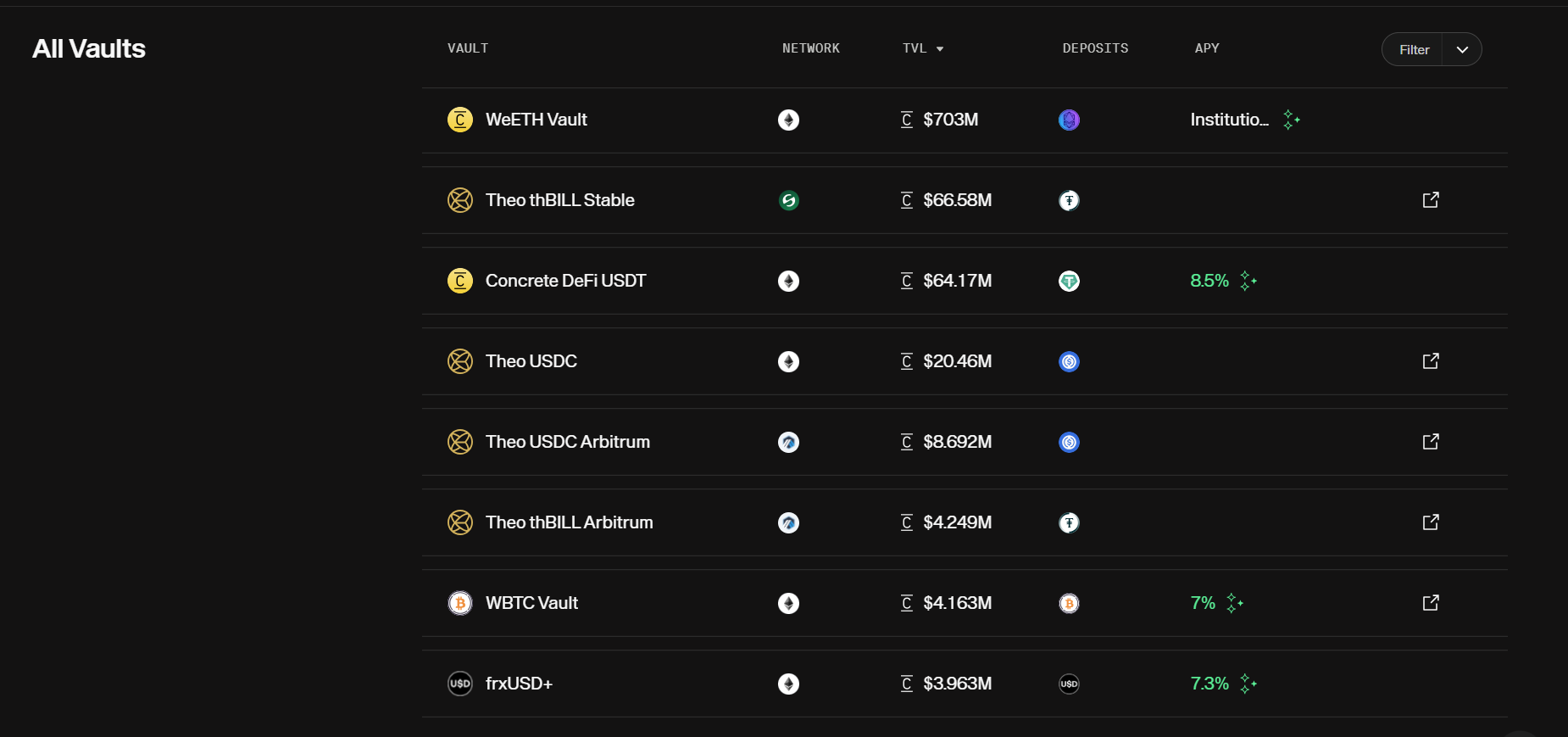
Explore Concrete and start your journey toward engineered yield at app.concrete.xyz