Beyond High APY: The Truth About Sustainable DeFi Strategies
 Rahulrj3 min read·Just now
--
“what Makes a DeFi Strategy Actually Sustainable?”
DeFi moves fast.
Almost too fast.
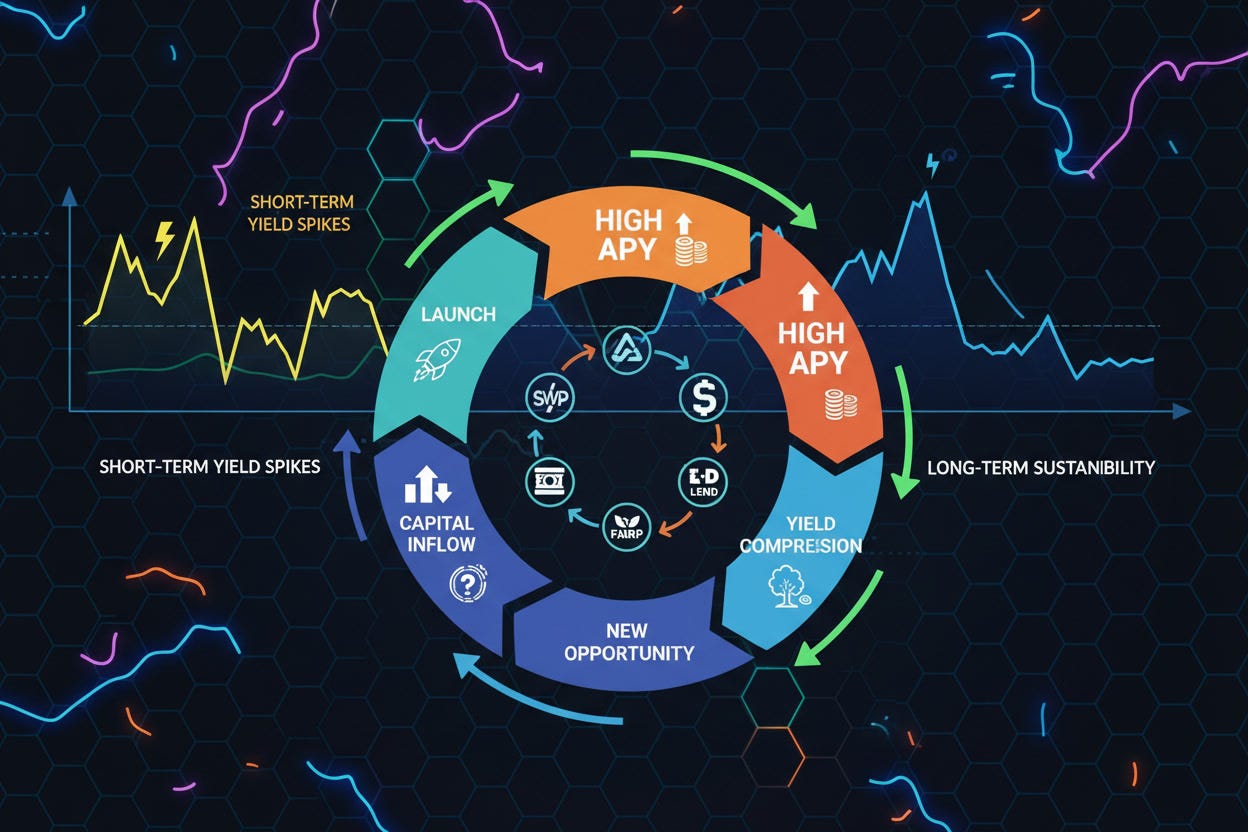
Every week, a new protocol launches.
APYs spike.
Capital rushes in.
And then?
Yields compress.
Liquidity disappears.
Attention shifts elsewhere.
We’ve all seen this pattern.
So the real question isn’t:
“What pays the most right now?”
It’s:
“What actually lasts?”
— -
## The Cycle We Keep Repeating
DeFi has a rhythm:
* High APY attracts capital
* Capital dilutes returns
* Incentives fade
* Liquidity rotates
This cycle repeats across chains, protocols, and narratives.
It’s not random.
It’s structural.
Most strategies aren’t designed to last — they’re designed to attract.
— -
## What Does “Sustainable” Really Mean?
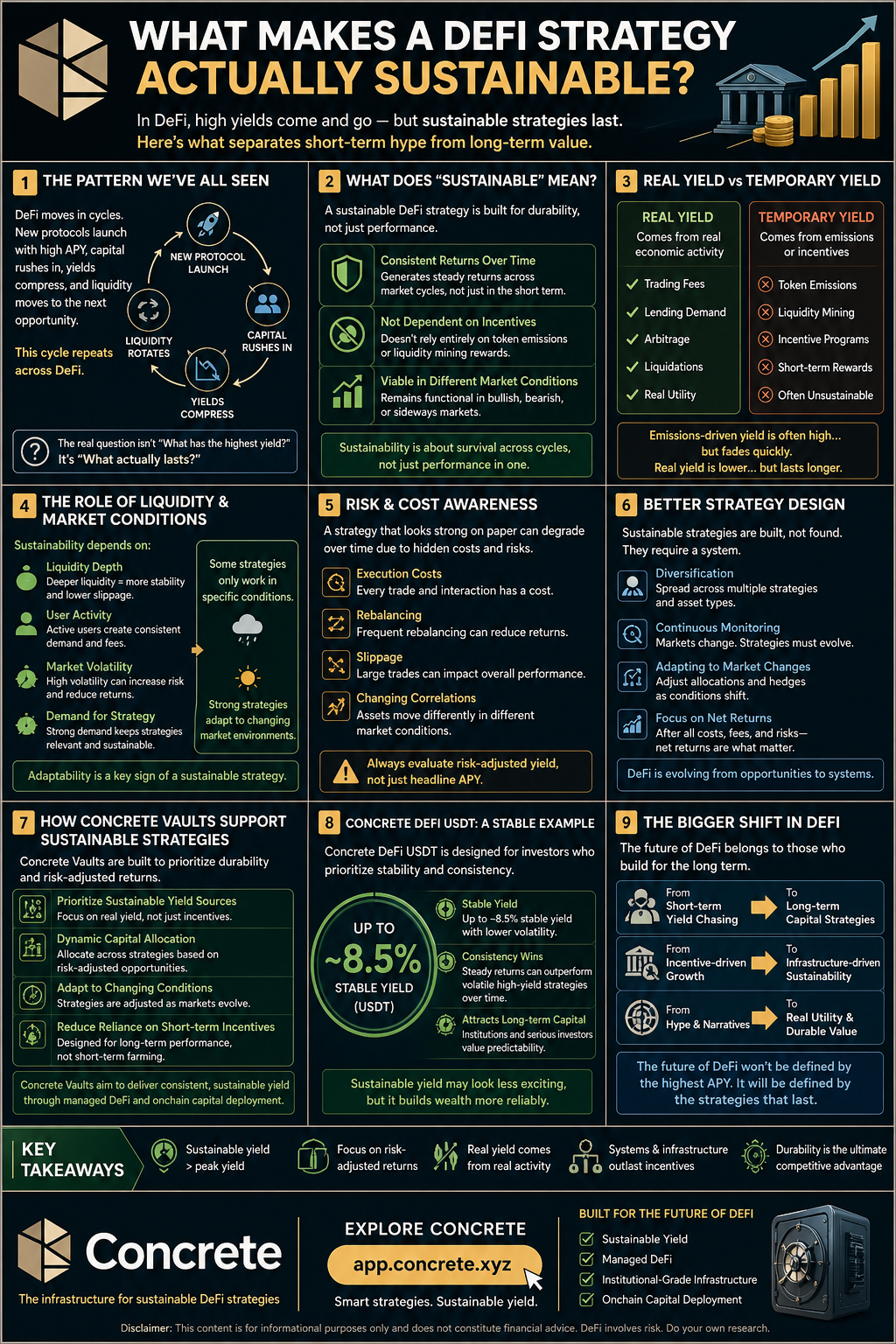
A sustainable DeFi strategy isn’t defined by peak returns.
It’s defined by “consistency and durability”.
A truly sustainable approach should:
* Generate stable returns over time
* Function without heavy reliance on incentives
* Adapt across different market conditions
This is about “survival across cycles, not just performance in one.
— -
## Real Yield vs Temporary Yield
Not all yield is equal.
Some comes from “real economic activity”:
* Trading fees
* Lending demand
* Arbitrage opportunities
Others come from:
* Token emissions
* Incentive programs
* Short-term liquidity mining
The difference is critical.
“Emissions-driven yield fades.”
“Real yield persists.”
Understanding this distinction is the foundation of sustainable investing in DeFi.
— -
## Liquidity, Markets, and Adaptability
Sustainability isn’t just about yield source —
it’s also about **market fit**.
A strategy depends on:
* Liquidity depth
* User participation
* Market volatility
* Demand for the underlying assets
Some strategies only work in bullish conditions.
Others collapse in volatility.
The strongest ones?
They adapt.
— -
## The Hidden Impact of Risk and Cost
On paper, many strategies look perfect.
In reality, they degrade.
Why?
Because of hidden factors:
* Execution costs
* Rebalancing frequency
* Slippage
* Changing correlations
A high APY means little if costs quietly erode returns.
This is where “risk-adjusted yield” becomes more important than raw numbers.
— -
## From Opportunities to Systems
Sustainable DeFi isn’t about chasing the next opportunity.
It’s about “building systems”.
Strong strategies are designed with:
* Diversification across multiple sources
* Continuous monitoring
* Dynamic adjustments
* Focus on net returns
This is where DeFi starts to resemble “institutional finance” — structured, calculated, and optimized.
— -
## The Role of Managed DeFi: Concrete Vaults
This shift is exactly where Concrete comes in.
“Concrete Vaults” are built around sustainability, not hype.
They aim to:
* Prioritize real, durable yield sources
* Allocate capital across strategies intelligently
* Adapt to changing market conditions
* Reduce dependence on short-term incentives
Instead of reacting to the market,
they’re designed to “avigate it”.
Explore Concrete at “app.concrete.xyz”
— -
## A Practical Example: Stability Over Hype
Take “Concrete DeFi USDT” as an example.
Offering around “~8.5% stable yield”, it may not look extreme.
But that’s the point.
* Lower volatility
* More predictable returns
* Stronger long-term performance potential
Over time, consistency often outperforms chaos.
Sustainable yield doesn’t need to be exciting.
It needs to be reliable.
— -
## The Bigger Shift in DeFi
DeFi is evolving.
From:
* Short-term yield chasing
To:
* Long-term capital strategy
From:
* Incentive-driven growth
To:
* Infrastructure-driven sustainability
The next phase of DeFi will reward:
* Patience over speed
* Structure over speculation
* Durability over hype
Because in the end:
The future of DeFi won’t be defined by the highest APY —
but by the strategies that last. 🚀