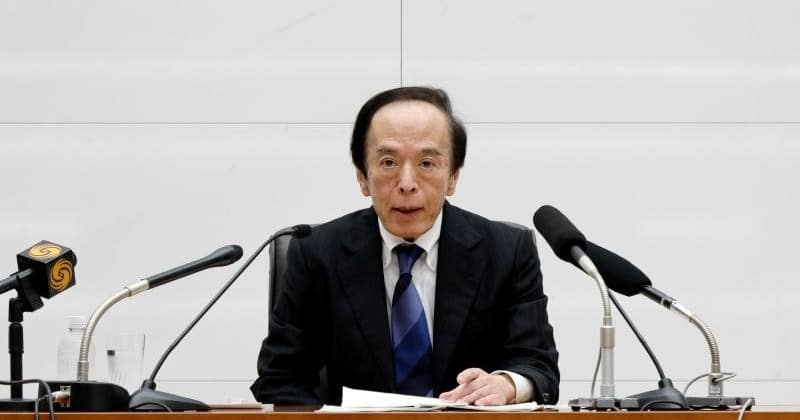
Bank of Japan Governor Kazuo Ueda hospitalized, will miss critical policy meeting
Ueda's unexpected absence from the June 15-16 BOJ meeting injects fresh uncertainty into markets already bracing for a potential rate hike.
Share
Add us on Google by Editorial Team Jun. 10, 2026The governor of the world’s fourth-largest economy’s central bank is in the hospital, and the timing could not be worse.
Bank of Japan Governor Kazuo Ueda has been hospitalized and will miss the BOJ’s monetary policy meeting scheduled for June 15-16. The central bank revealed the news on June 10 but offered no details about his condition, the expected length of his absence, or who will step into his role during the meeting.
Markets had been pricing in the possibility of a 25 basis point rate hike, a move Ueda himself had been publicly telegraphing. Now the person steering the ship won’t be on the bridge when it matters most.
What we know, and what we don’t
Ueda was last seen in public on June 3, delivering a speech on economic conditions. Days earlier, on May 27, he had discussed inflation considerations and flagged upside price risks, language that market watchers interpreted as laying groundwork for tighter policy.
AdvertisementThe BOJ has not disclosed what put Ueda in the hospital, how serious it is, or when he might return. Ueda has served as BOJ Governor since April 9, 2023, and his tenure has been defined by a careful, deliberate pivot away from Japan’s decades-long experiment with ultra-loose monetary policy.
Deputy Governor Shinichi Uchida is expected to participate in the upcoming meeting, though his own health has been a concern. Uchida was treated for leukemia in November 2025. No formal interim leadership arrangements have been announced.
Why this meeting mattered before Ueda’s absence
Rising energy costs, geopolitical tensions emanating from the Middle East, and persistent inflationary pressures had all been pushing the BOJ toward action. Ueda had been weighing a rate increase in discussions with other board members, and his public comments strongly hinted the June meeting could be the moment. A 25 basis point hike would have been another step in the BOJ’s normalization process, following the BOJ’s first tightening of monetary policy in 17 years when it ended negative interest rates and yield curve controls in March 2024.
Without Ueda’s presence, the board faces a choice: proceed with the rate hike he appeared to favor and risk looking like they’re acting without their leader’s mandate, or pause and risk looking indecisive at a moment when inflation data arguably demands action.
What this means for investors
Markets had been cautiously optimistic about the June meeting’s outcome, with traders positioning for a rate hike. Ueda’s absence scrambles those positions because a hike is still possible, a hold is now more likely, and the communication around either decision will lack the credibility that comes from the governor personally explaining it.
For the yen, a rate hike without Ueda could be read as institutional resolve, strengthening the currency. A delay could weaken it, particularly against the dollar, at a time when yen weakness has already been a recurring concern for Japanese policymakers.
If his absence extends weeks or months, Japan’s central bank faces a genuine leadership crisis during one of the more sensitive periods in global monetary policy. Investors should watch for any official statement on interim governance at the BOJ, and pay close attention to how Uchida and other board members communicate in the days ahead.
Disclosure: This article was edited by Editorial Team. For more information on how we create and review content, see our Editorial Policy.