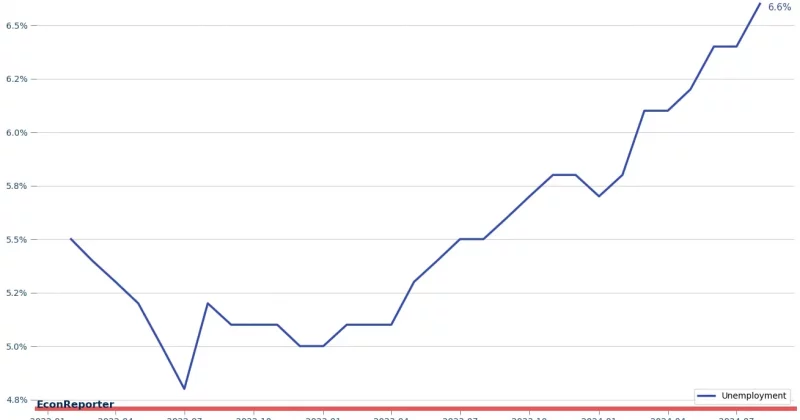
Bank of Canada reports highest long-term unemployment since early 2000s
Long-term unemployment hit 25.4% in January 2026, the worst reading outside pandemic years since 1997, as Canada's labor market signals deepening structural cracks.
Share
Add us on Google by Editorial Team May. 26, 2026Canada’s labor market is flashing warning signs that haven’t been this bright in over two decades. Bank of Canada External Deputy Governor Nicolas Vincent laid out the grim picture in a speech on May 26, delivering data that paints a portrait of an economy struggling to put people back to work, and keep them there.
Long-term unemployment reached 25.4% in January 2026. That’s the highest level recorded outside of pandemic years since May 1997. The average duration of unemployment hit 22.7 weeks in the same month, a figure not seen since late 1999.
The numbers tell a painful story
Canada’s overall unemployment rate climbed to 6.9% in April 2026, up from 6.7% in March. The country shed roughly 112,000 jobs in the first four months of the year, with 18,000 of those disappearing in April alone.
Young workers are bearing the brunt. Youth unemployment soared to 14.3% in April 2026, with young Canadians accounting for nearly a quarter of all long-term unemployed.
AdvertisementVincent, speaking before CIRANO in Montreal, described the current hiring environment as a “low hire-low fire” dynamic. Companies aren’t aggressively cutting staff, but they’re not bringing new people on board either.
Job-finding rates have slowed significantly, meaning once someone loses a position, the path back to employment is longer and harder than it used to be. That slowdown is what’s driving the surge in long-term unemployment, not necessarily a wave of mass layoffs, but a labor market that’s essentially stopped circulating.
What’s causing the freeze
Vincent pointed to several intersecting forces creating this mess. Skills mismatches top the list. The jobs that exist don’t align with the skills that unemployed workers possess, creating a frustrating gap where openings go unfilled while qualified candidates in other fields can’t find work.
US tariffs are adding pressure from the trade side, squeezing industries that depend on cross-border commerce. An aging population is simultaneously shrinking the labor force and shifting the composition of available workers.
The Bank of Canada had already flagged persistent labor market slack in its April 2026 Monetary Policy Report. Vincent’s speech emphasized that the data points to structural problems rather than a temporary cyclical dip.
He stressed the need for education and training programs to evolve. The current system, in his framing, isn’t producing workers equipped for the jobs the economy actually needs.
What this means for investors
Persistent unemployment at these levels has real consequences for the broader economy. Consumer spending weakens when a growing share of the population is either jobless or underemployed.
For crypto markets specifically, the implications flow through monetary policy channels. Elevated unemployment and labor market slack typically give central banks more room to cut interest rates or at minimum hold off on tightening. The Bank of Canada has been navigating a tricky balancing act between inflation concerns and growth risks, and data like this tips the scale toward accommodation.
The workforce retraining angle also opens a niche opportunity. Companies and platforms focused on education technology, skills credentialing, and workforce development could see increased government contracts and private investment as policymakers scramble to close the skills gap.
Disclosure: This article was edited by Editorial Team. For more information on how we create and review content, see our Editorial Policy.