At first glance, DeFi seems simple.
--
Replace institutions with code, remove intermediaries, and create a system where trust is no longer required.
For a while, that idea made sense.
But as decentralized finance matured, a more nuanced reality emerged.
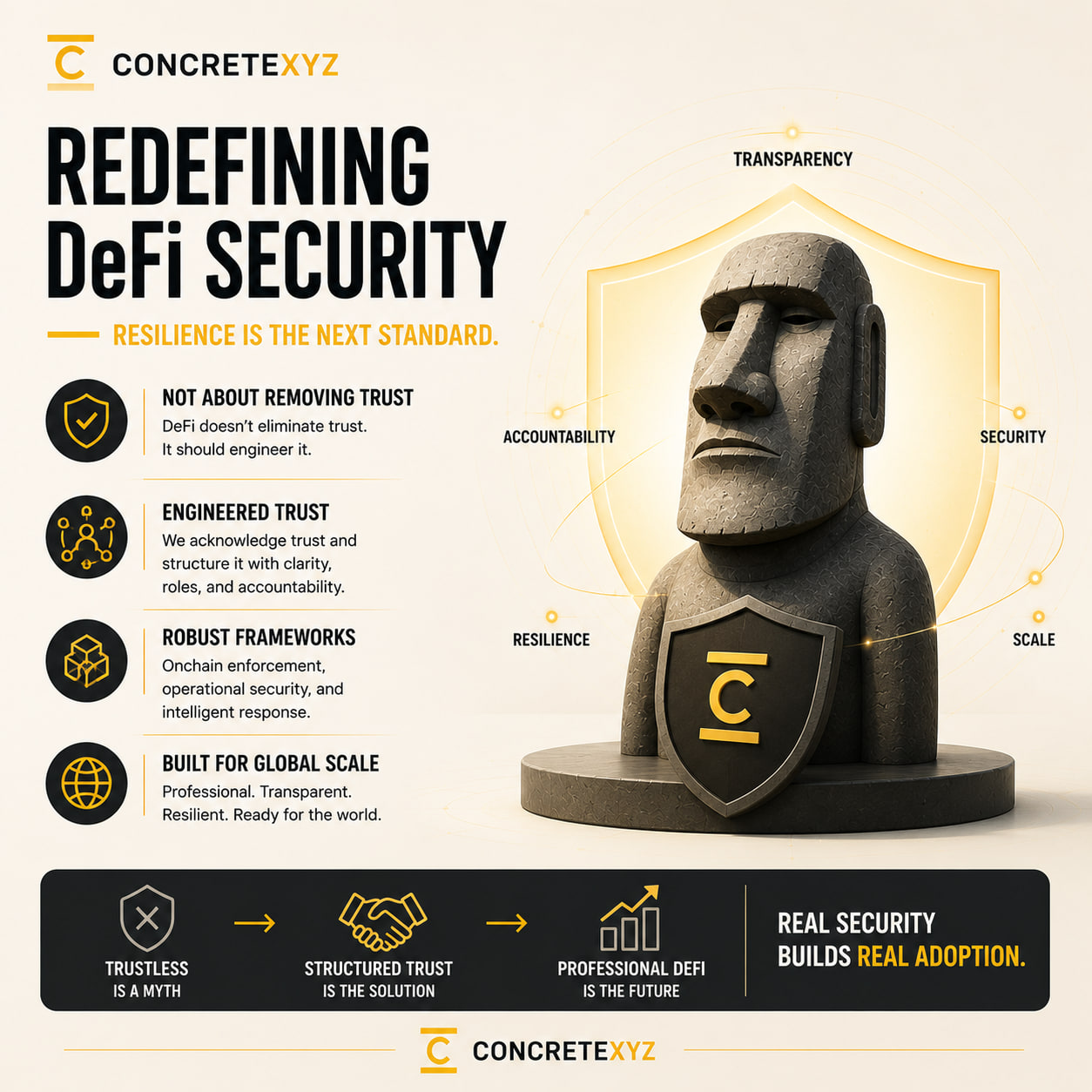
Trust was never eliminated. It was redistributed.
Instead of trusting banks, users now trust smart contracts, governance structures, oracle networks, bridges, and execution environments.
Each of these components introduces its own assumptions.
Smart contracts assume correct code.
Governance assumes rational participation.
Oracles assume reliable data feeds.
Bridges assume secure cross-chain communication.
These are not guarantees — they are trust models.
Understanding DeFi requires understanding where these assumptions exist.
Many systems appear decentralized while relying on centralized elements behind the scenes. This creates a gap between perception and reality.
Closing that gap is essential for the future of the industry.
Rather than attempting to eliminate trust entirely, modern approaches focus on structuring it.
Engineered trust means defining roles, permissions, and responses in advance. It creates systems that are transparent about their dependencies and prepared for failure scenarios.
This approach shifts the focus from ideology to resilience.
Concrete is one example of this transition. By integrating operational security, monitoring, and response mechanisms, it acknowledges the complexity of real-world systems.
As DeFi continues to evolve, success will depend not on removing trust — but on understanding and designing it properly.