ASIC Mining in 2026: Is It Still Profitable or Slowly Dying?
A realistic look at Bitcoin mining ROI, energy costs, and why hosting may be the only edge left.
 Rubekins3 min read·Just now
--
For years, I’ve seen the same cycle in crypto.
Mining is “dead”… until it isn’t.
In 2026, that conversation is back again — especially around ASIC mining. Rising energy costs, increasing hash rate, and tighter margins are forcing miners to ask a simple question:
Is ASIC mining still worth it today?
The answer isn’t as simple as yes or no — and if you’ve been in this space long enough, you already know that.
📊 The Reality of ASIC Mining in 2026
Let’s start with facts.
- Bitcoin hash rate continues to hit all-time highs
- Mining difficulty keeps increasing
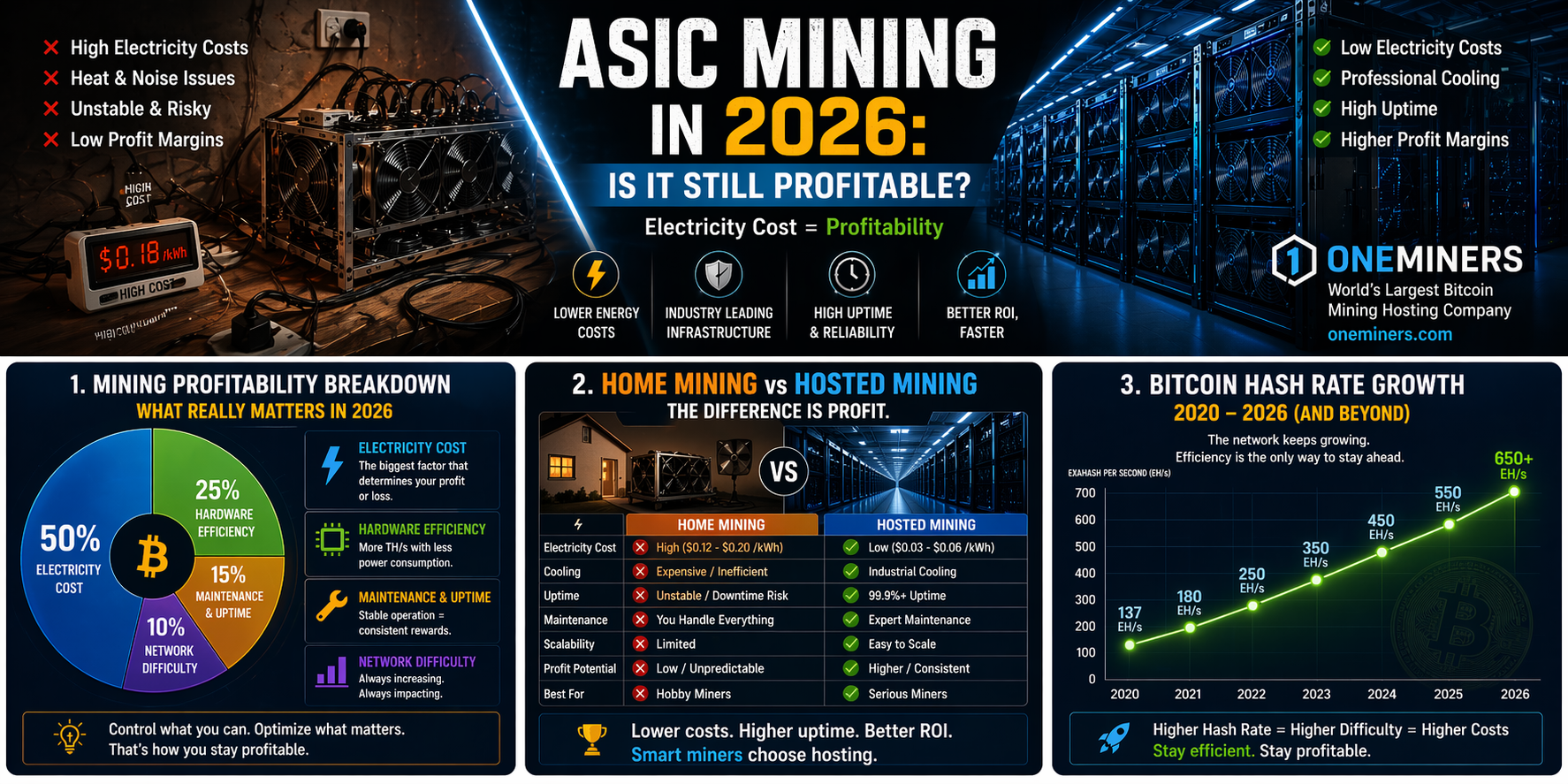
- Energy costs are the #1 factor affecting profitability
According to industry data and reports from sources like Cambridge Bitcoin Electricity Consumption Index:
“Electricity cost remains the dominant factor in determining mining profitability.”
That hasn’t changed.
What has changed is the margin for error.
Back then, you could mine profitably with average setups. Today, if your electricity cost is too high — even slightly — you’re already losing.
⚡ Why Energy Costs Decide Everything
This is where most new miners fail.
You can have the best ASIC machine in 2026 — but if your power rate is expensive, ROI becomes unrealistic.
Example:
- Miner A: $0.12/kWh → barely profitable or negative
- Miner B: $0.05/kWh → sustainable profit
Same machine. Completely different outcome.
That gap is why many experienced miners are shifting away from home setups and toward hosting solutions with cheaper electricity.
🏭 The Rise of ASIC Hosting (Not Optional Anymore)
In my experience, this is the biggest shift happening right now.
Hosting used to be optional.
In 2026, it’s becoming a necessity for serious miners.
Instead of running machines at home, miners are moving operations to facilities with:
- Lower electricity rates
- Better cooling systems
- Stable uptime
- Scalable infrastructure
Some providers have started positioning themselves around cost efficiency.
For example, platforms like OneMiners focus heavily on reducing operational costs—especially electricity—which is now the biggest competitive advantage in mining.
Based on their recent updates and reports:
- They emphasize low-cost energy regions
- Offer hosting + hardware integration
- Focus on improving ROI timelines
You can read more here:
- https://oneminers.com/blogs/news/oneminers-leads-the-world-s-cheapest-crypto-mining
- https://oneminers.com/blogs/news/top-5-bitcoin-mining-hosting-companies-for-profitability-in-2026
📉 Is Mining Still Profitable?
Short answer: Yes — but only if done right.
Here’s the realistic breakdown:
Profitable if:
- You have access to cheap electricity
- You use efficient ASIC miners
- You optimize uptime and cooling
- You reduce operational inefficiencies
Not profitable if:
- You mine at home with high power costs
- You ignore maintenance and downtime
- You rely on outdated machines
This aligns with what many industry analysts say:
“Mining profitability is no longer about hardware alone — it’s about operational efficiency.”
🧠 The Smart Miner’s Strategy in 2026
From what I’ve seen over the years, the mindset has shifted.
It’s no longer about just mining Bitcoin.
It’s about:
- Cost control
- Strategic deployment
- Long-term positioning
That’s why many miners now:
- Buy ASICs + host them immediately
- Focus on ROI timelines instead of daily profits
- Treat mining as infrastructure, not a hobby
⚖️ Honest Takeaway
ASIC mining isn’t dead.
But the “easy profit” era is gone.
If you’re entering mining in 2026, you need to treat it like a real business — not a side experiment.
And right now, the biggest edge isn’t the machine.
It’s where and how you run it.