𝗗𝗲𝗙𝗶 𝗪𝗮𝘀 𝗡𝗲𝘃𝗲𝗿 𝗧𝗿𝘂𝘀𝘁𝗹𝗲𝘀𝘀 — 𝗪𝗲 𝗝𝘂𝘀𝘁 𝗠𝗼𝘃𝗲𝗱 𝘁𝗵𝗲 𝗧𝗿𝘂𝘀𝘁
 rjsrams3 min read·Just now
--
There’s a sentence almost everyone in crypto has heard at least once:
“Don’t trust people. Trust code.”
It sounds clean. Almost perfect.
And for a while, it felt like DeFi actually delivered on that promise. No banks, no intermediaries, no need to rely on anyone. Just smart contracts doing their thing on-chain.
But the longer you spend in this space, the harder it becomes to believe that idea at face value.
Because if you look closely…
Nothing here is truly trustless.
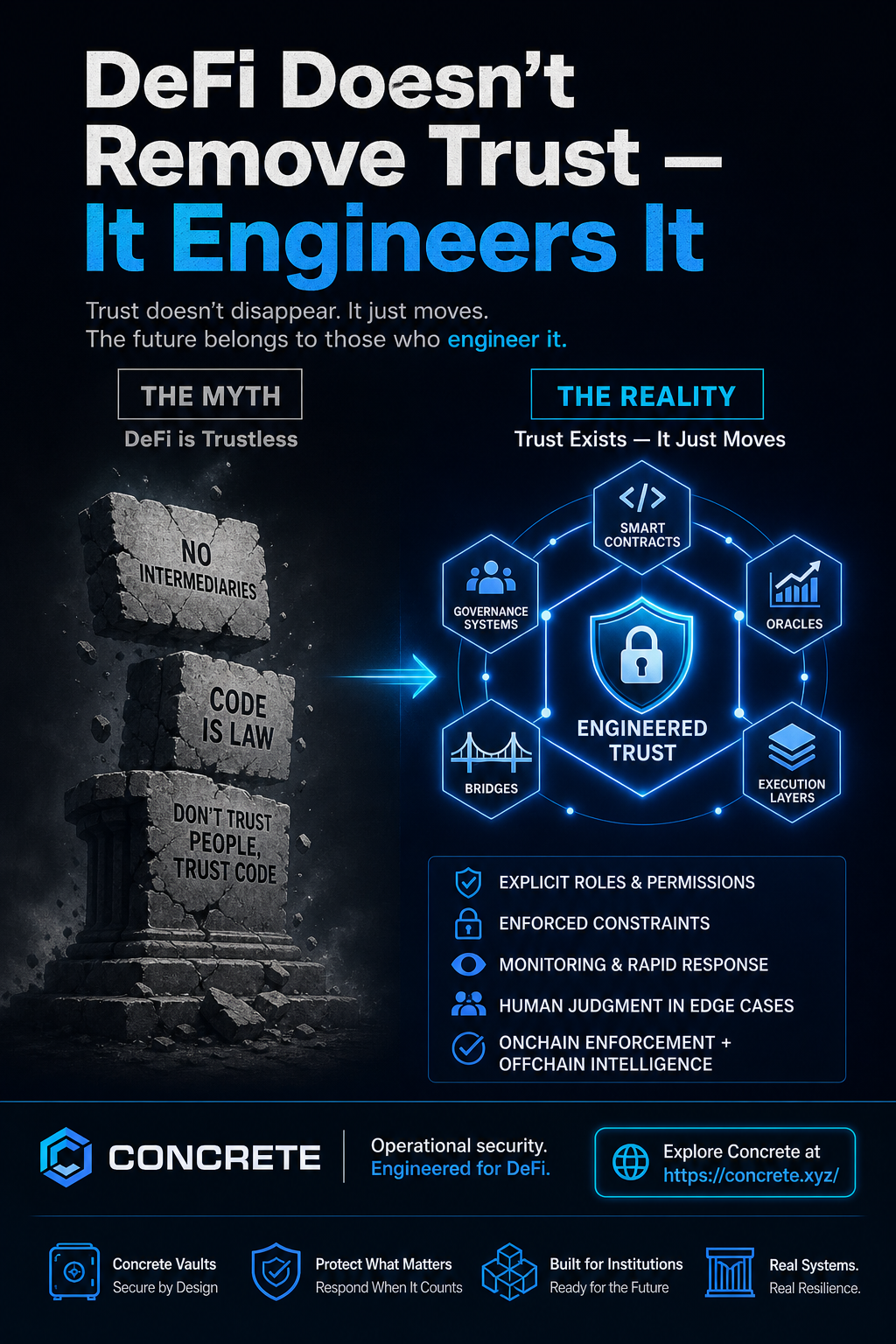
We Didn’t Remove Trust — We Relocated It
Early DeFi narratives made it seem like trust was gone.
In reality, it just shifted into places that are easier to ignore.
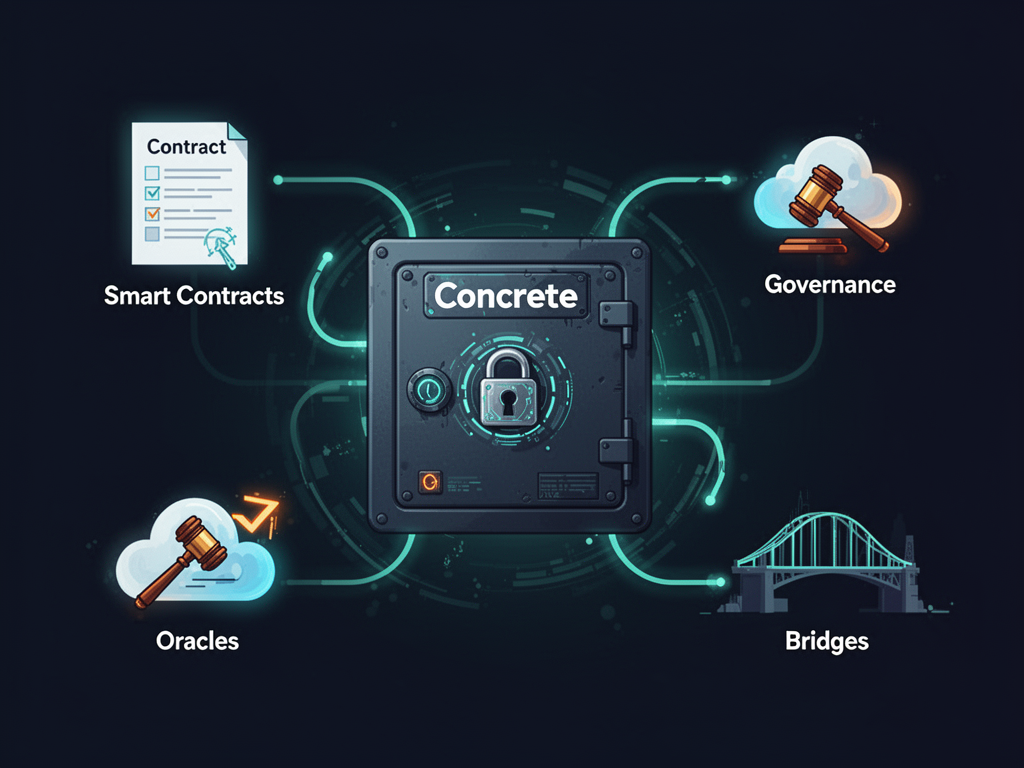
Every time you interact with a protocol, you’re still trusting something:
- That the smart contract doesn’t have a hidden bug
- That governance decisions won’t suddenly turn against users
- That oracles are feeding accurate data
- That bridges won’t become the next exploit headline
- That the chain itself executes everything correctly
We didn’t eliminate trust.
We just buried it deeper into the stack.
The Comfort of “Looking Decentralized”
There’s also something else happening in DeFi that people don’t talk about enough:
A lot of systems look decentralized… but aren’t actually that resilient.
You’ll see things like:
- Multisigs controlling critical functions
- DAOs where only a tiny fraction of users vote
- Timelocks that delay problems instead of preventing them
- Protocols that work fine — until something goes wrong
From the outside, everything feels decentralized.
But under stress, the cracks show.
That’s the difference between decentralization as a concept and security as a reality.
So What’s the Alternative?
If trust isn’t going away, then pretending it doesn’t exist is probably the wrong approach.
What makes more sense is to design it properly.
This is where the idea of engineered trust starts to matter.
Instead of hiding assumptions, you make them explicit:
- Who has control over what
- What actions are allowed (and what aren’t)
- What happens when something breaks
- How the system responds in real time
That’s not less decentralized.
It’s just more honest.
Why Code Alone Isn’t Enough
One of the biggest misconceptions in DeFi is that code can handle everything.
It can’t.
Markets move unpredictably. Attacks evolve. Edge cases happen when you least expect them.
And when those moments come, fully automated systems often don’t “fail gracefully” — they just fail.
That’s why real systems need:
- Monitoring, not just deployment
- Response mechanisms, not just prevention
- Human judgment in critical situations
- Multiple layers of security, not a single point of truth
If a protocol can’t react, it’s not secure — it’s fragile.
Where Concrete Fits In
This is exactly the direction newer infrastructure is starting to take.
Instead of chasing the illusion of being “trustless,” platforms like Concrete are leaning into something more practical: making trust visible and enforceable.
Concrete is built around the idea that:
- Trust should be explicit, not hidden
- Systems should be able to respond, not just resist
- Onchain enforcement works best when paired with offchain intelligence
- Clear roles and controlled execution matter more than vague decentralization claims
It’s less about ideology, and more about operational security that actually works in the real world.
If you’re curious how that looks in practice, it’s worth exploring:
👉 https://concrete.xyz/
The Shift That’s Already Happening
DeFi is growing up.
The conversation is slowly moving away from “trustless everything” toward something more grounded.
Because in the end:
- Trust isn’t optional
- Complexity isn’t avoidable
- And resilience matters more than narratives
The next generation of DeFi infrastructure won’t be defined by who claims to remove trust entirely.
It will be defined by who understands it well enough to design it, structure it, and enforce it properly.
And honestly, that’s a much stronger foundation to build on.