
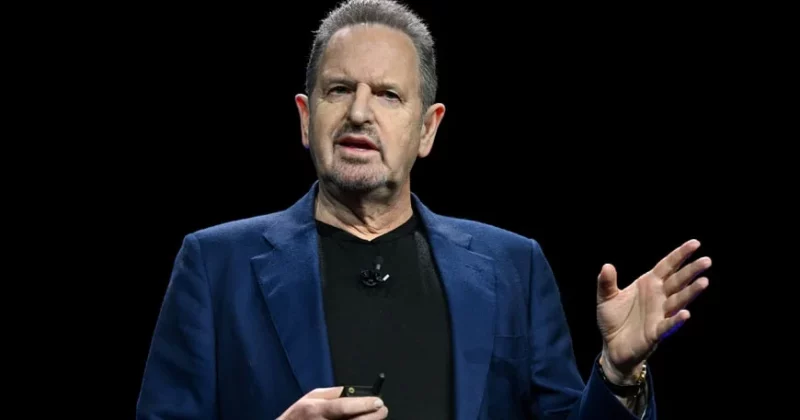
Arm Holdings CEO says US faces near-impossible challenge in banning AI CPU chip exports to China
Rene Haas compared CPUs to oil, arguing their ubiquity makes export restrictions fundamentally different from GPU bans.
Share
Add us on Google by Editorial Team Jun. 2, 2026Trying to ban AI-capable CPU exports to China would be like trying to ban oil. That’s the analogy Arm Holdings CEO Rene Haas offered during Computex 2026 in Taipei, arguing that the widespread, general-purpose nature of CPUs makes any meaningful export restriction a logistical and technical nightmare.
Haas described such a ban as “nearly impossible,” pointing to the fundamental challenge of defining performance thresholds for chips that power everything from smartphones to data centers to industrial equipment. Unlike GPUs, which have relatively narrow, well-defined use cases, CPUs are embedded in virtually every computing device on Earth.
Why CPUs aren’t GPUs
When the US government restricted Nvidia’s high-end GPU exports to China, regulators could draw reasonably clear lines. GPUs have specific compute benchmarks that make it possible to say “this chip is too powerful for export” without accidentally banning your cousin’s gaming rig.
AdvertisementCPUs don’t work that way. Haas argued that restricting CPU exports would require what he called a “pretty hardcore cut,” essentially a comprehensive ban that would ripple through global supply chains in ways GPU restrictions never did.
This isn’t a new concern for Haas. During a Bloomberg interview in June 2025, he had already criticized US export controls, warning they might stifle innovation rather than achieve their stated national security objectives. His Computex remarks represent a sharpening of that critique.
The regulatory backdrop
Haas’s comments landed just one day after the US Commerce Department affirmed that existing AI chip export bans extend to all firms owned by Chinese parent companies, regardless of where those subsidiaries operate globally. That expansion significantly broadened the scope of restrictions, catching companies that might have previously operated in regulatory gray zones.
Arm is currently negotiating with TSMC and Socionext for chip wafer supplies, conversations that are inevitably shaped by the evolving export control landscape.
Arm doesn’t manufacture chips directly. It designs the instruction set architecture that other companies use to build processors. That business model means Arm’s technology ends up in chips made by dozens of companies across multiple countries.
Disclosure: This article was edited by Editorial Team. For more information on how we create and review content, see our Editorial Policy.