Apple unveils redesigned Siri AI with Gemini technology, beta launch later this year
Apple's $1 billion annual deal with Google powers a rebuilt voice assistant that won't hit most global markets at launch.
Share
Add us on Google by Editorial Team Jun. 9, 2026Apple just admitted something it has resisted for over a decade: it needs Google’s help to make Siri not terrible.
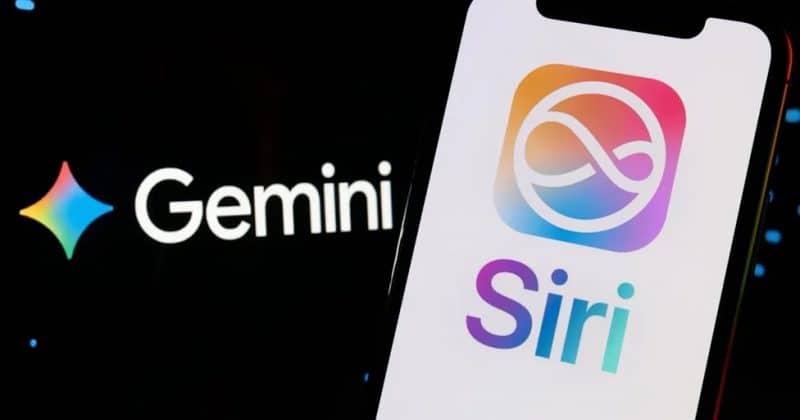
At WWDC 2026 on June 8, Apple introduced Siri AI, a ground-up rebuild of its voice assistant powered by Google’s Gemini models. The consumer beta is expected later this year alongside iOS 27 and iPadOS 27, initially supporting English for US users only.
What Apple actually announced
Siri AI isn’t just a software update. It’s a standalone app with its own dedicated interface, a departure from the floating orb that has lived at the bottom of iPhone screens for years.
The new assistant includes on-screen awareness, meaning it can see what you’re looking at on your device and respond contextually. It can also perform cross-app actions, stringing together tasks across multiple apps without requiring you to jump between them manually.
The underlying engine is Google’s Gemini, the same family of large language models that powers Google’s own AI products. Apple formalized the partnership on January 12, 2026, after what the company described as a comprehensive evaluation of available AI technologies. The deal is reportedly worth approximately $1 billion annually.
AdvertisementApple emphasized that the integration would utilize its Private Cloud Compute infrastructure, with no user data being stored or shared with Google.
The initial rollout excludes the EU and China, with broader language support and regional availability planned for future releases.
Why this took so long
Siri launched in 2011. For the first few years, it felt like the future. Then it stopped improving while everything around it got smarter.
Apple’s internal AI efforts reportedly hit multiple roadblocks over several years. The company’s famously secretive culture and preference for on-device processing created engineering constraints that competitors, who were more comfortable with cloud-based AI, simply didn’t face.
Look, Apple has worked with Google before. Google has been the default search engine on Safari for years under a deal worth far more than $1 billion annually. But search is a background service most users don’t think about. Siri is the voice of Apple’s brand. Outsourcing its intelligence is a fundamentally different kind of partnership.
What this means for investors
For Google, the deal validates Gemini as enterprise-grade AI infrastructure. A $1 billion annual contract with the world’s most valuable company is the kind of reference customer that opens doors. It also means Google’s AI models will be running on roughly two billion active Apple devices, even if Apple’s privacy layer limits the data Google can extract from that presence.
The year-long contract structure is notable. It suggests both companies are treating this as a trial period rather than a permanent arrangement.
The exclusion of the EU and China from the initial launch limits the near-term addressable market considerably. Those two regions represent hundreds of millions of Apple device users who won’t have access to Siri AI’s new capabilities at launch.
There were no mentions of blockchain integration, token frameworks, or decentralized AI components in Apple’s presentation.
Disclosure: This article was edited by Editorial Team. For more information on how we create and review content, see our Editorial Policy.