Altius Is an Upgrade, Not a Replacement
 Ny_Joker_Eth5 min read·Just now
--
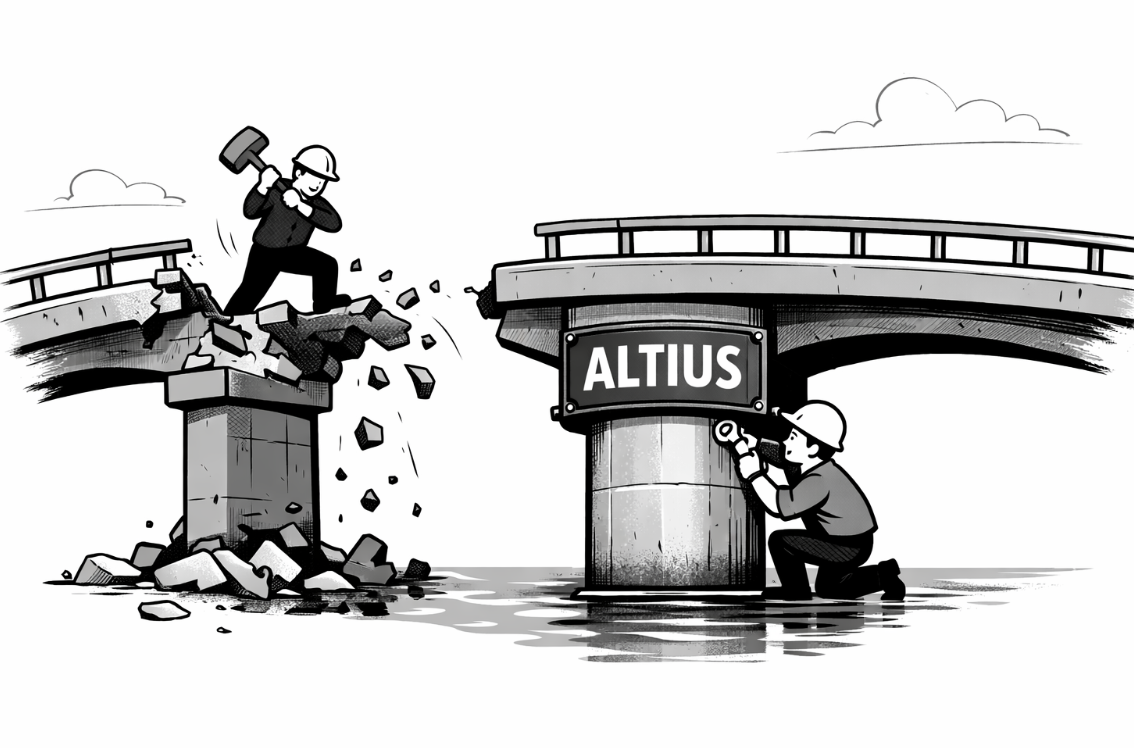
Crypto loves replacement stories. Every cycle, new projects appear and promise to replace the old stack, replace old chains, replace old systems, or replace the way things have been done so far. It is an easy story to tell because it sounds bold. It feels clean. It gives the market something dramatic to believe in. But real infrastructure does not always win that way. In many cases, the most important infrastructure companies do not win by replacing everything. They win by improving the layer that matters most.
That is why the Altius thesis is easier to understand if you read it as an upgrade story, not a replacement story. The most interesting part is not that Altius could be framed as another chain competing for attention. The more interesting part is that it can be framed as a way to improve execution without asking the market to throw everything else away. That is a much more realistic kind of infrastructure bet. It is less theatrical, but often more powerful.
This matters because markets usually resist total rewrites. People like the idea of clean slates in theory, but in practice most real systems are built on top of what already exists. Businesses do not want to rebuild their entire stack every time a new architecture looks better on paper. Developers do not want to abandon ecosystems, tools, and users unless the reason is overwhelming. Institutions almost never move because a new system sounds exciting. They move when the improvement is meaningful enough and the transition is realistic enough. That is why upgrade paths often matter more than replacement narratives.
Execution is exactly the kind of layer where this logic becomes powerful. If execution is one of the real bottlenecks in blockchain infrastructure, then improving execution can create meaningful gains without requiring the whole stack to be reinvented. You do not need to replace everything in order to make the system behave better under load. You do not need to reset the whole market to change the quality of performance. In some cases, the highest-leverage move is not starting over. It is improving the part of the system that most strongly shapes how the rest of it feels.
That is what makes Altius strategically interesting. The story becomes much stronger when it is not read as “here is another new blockchain” but as “here is a better execution layer.” That framing changes everything. A new blockchain has to fight a very crowded battle. It has to build users, attract liquidity, grow an ecosystem, create distribution, and convince the market to care. A better execution layer is a different kind of opportunity. If it solves a real bottleneck, its value can exist even without winning the whole narrative war. It does not need to replace every chain. It needs to matter where the constraint actually lives.
This also fits the direction the market seems to be moving. As blockchain infrastructure matures, the market is becoming less impressed by broad claims and more interested in practical improvements. It is starting to care more about predictable performance, better behavior under load, lower friction for real use cases, and infrastructure that can support serious activity without collapsing into familiar tradeoffs. In that world, the company that improves execution may have a clearer path to relevance than the company that simply promises a brand-new world from scratch.
There is something important and understated about this. Upgrade stories do not usually sound as exciting as replacement stories. They do not come with the same sense of revolution. But they are often closer to how real infrastructure changes happen. The internet did not improve because every layer was thrown away at once. Cloud systems did not scale by replacing the entire software world in one move. Payment systems did not evolve only through total resets. In many cases, the biggest improvements came from changing the right layer in the right way. That is the kind of logic that makes the Altius thesis feel more grounded than a typical crypto pitch.
It also makes the commercial story more believable. If Altius can be understood as a better way to handle execution, then its relevance does not depend only on whether it becomes a dominant destination on its own. It can matter because it improves the performance profile of systems that already exist or are already being built. That is a very different kind of strategic position. It shifts the company from being another participant in a winner-take-all narrative toward being a layer that can create value across multiple environments. And that often makes for a stronger infrastructure thesis.
This is especially important in a market that is still learning to separate hype from usefulness. Crypto often rewards big replacement stories because they are simple and emotional. But the systems that last are usually the ones that solve painful problems in a usable way. If execution quality is becoming more important, and if sequential bottlenecks are becoming harder to ignore, then the company that offers a meaningful execution upgrade may be addressing the market in a much more practical language. That is often how serious infrastructure gets adopted: not by asking the world to start over, but by making what already exists work better.
That does not mean replacement stories never matter. Sometimes they do. Sometimes the old system is too limited and a clean break really is necessary. But those cases are rarer than crypto likes to imagine. More often, markets evolve by absorbing useful improvements step by step. That is why “upgrade” can be a more powerful word than it first sounds. It suggests lower resistance, better integration, and a path to adoption that does not depend on blowing up everything that came before. In infrastructure, that often matters more than sounding revolutionary.
This is why the Altius thesis deserves to be read through that lens. It may turn out to be much more important as an execution upgrade than as a replacement chain. And if that is true, then the company is not competing in the shallowest part of the market conversation. It is operating where some of the highest-leverage infrastructure value may actually sit. Not in replacing the whole system, but in improving the part that most strongly determines whether the system feels usable, stable, and real under demand.
In the end, that may be one of the clearest reasons to take Altius seriously. The strongest infrastructure companies often win not by asking the market to abandon everything it has, but by making the critical layer better. If execution is becoming that critical layer, then an execution upgrade can matter more than another replacement story. And that is exactly what makes Altius interesting. It is not just a bet on performance. It is a bet on where practical infrastructure value is most likely to emerge.