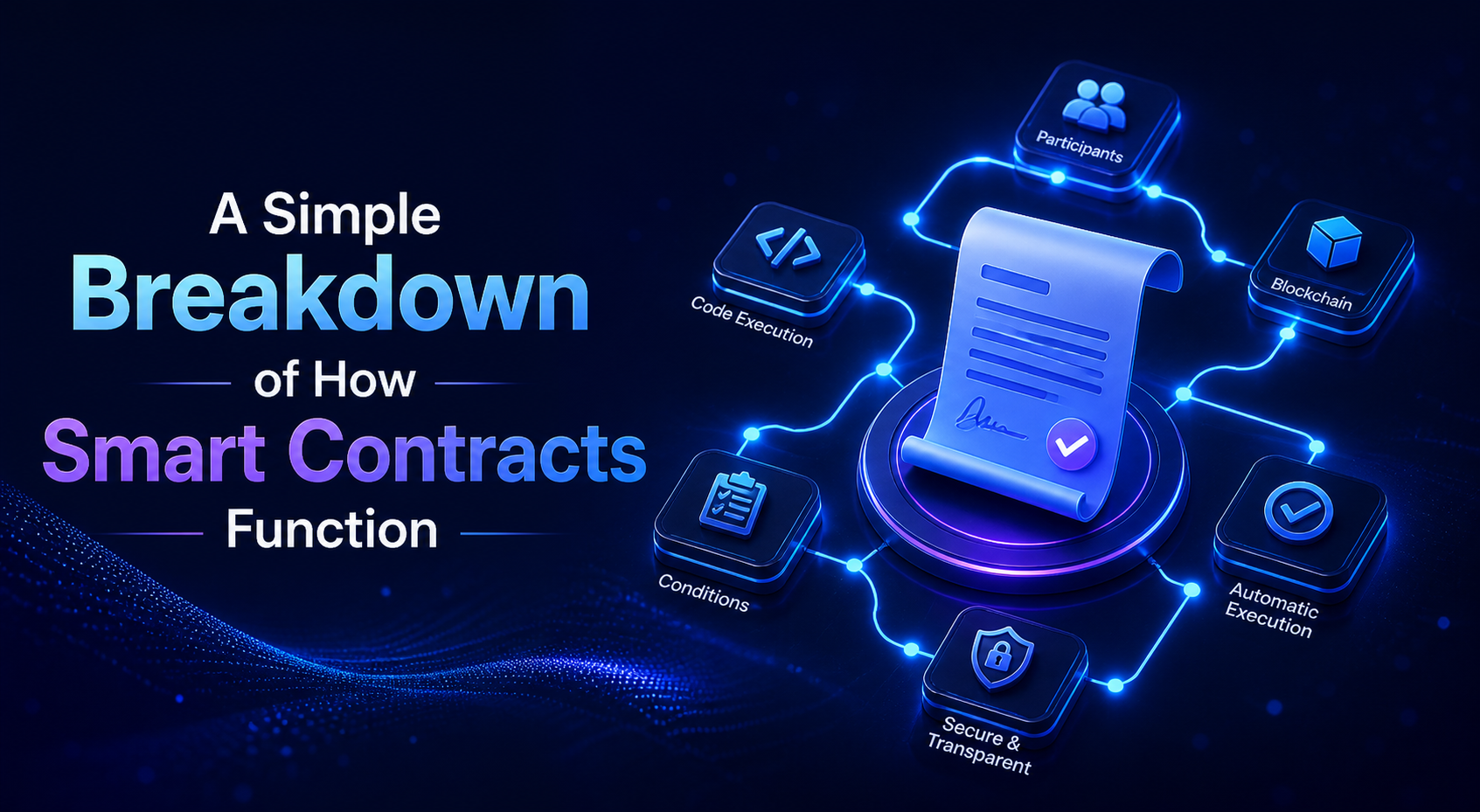
A Simple Breakdown of How Smart Contracts Function
 Abcposting4 min read·Just now
--
Blockchain technology has introduced many innovations that are transforming digital systems, finance, and online transactions. One of the most powerful and widely discussed innovations is the smart contract. Smart contracts are helping businesses and users automate agreements, reduce dependency on intermediaries, and improve transaction efficiency in decentralized environments.
Although the term may sound technical, the concept behind smart contracts is actually simple. They are self-executing digital agreements programmed to perform specific actions automatically when certain conditions are met.
As Blockchain 20 technology continues evolving, smart contracts are becoming increasingly important in decentralized finance (DeFi), digital payments, gaming, supply chains, and many other industries.
To explore blockchain activity and smart contract transactions in real time, you can visit the official
Advance Blockchain Explorer.
What Are Smart Contracts?
A smart contract is a digital program stored on a blockchain network that automatically executes actions when predefined conditions are fulfilled.
Unlike traditional contracts that often require lawyers, banks, or third-party verification, smart contracts operate through blockchain technology and automated code.
In simple words:
If certain conditions are met, the contract automatically performs the agreed action.
For example:
- A payment can automatically be released after a service is completed.
- Digital assets can be transferred instantly once verification is successful.
- Subscription services can renew automatically through blockchain systems.
Smart contracts remove unnecessary delays and reduce manual intervention.
How Smart Contracts Work
Smart contracts function through blockchain networks using programmed instructions.
Here’s a simple breakdown of the process:
1. Agreement Creation
The terms and conditions are written into a blockchain-based code structure. These rules define what actions should happen and under which conditions.
Example:
- If User A sends payment, then User B receives digital access.
2. Blockchain Deployment
The smart contract is uploaded to the blockchain network. Once deployed, it becomes decentralized and cannot easily be altered without proper authorization.
This creates:
- Transparency
- Security
- Tamper resistance
- Trustless automation
3. Condition Verification
The blockchain network continuously monitors whether the predefined conditions are fulfilled.
For example:
- Payment confirmation
- Delivery verification
- Wallet authentication
- Asset ownership validation
4. Automatic Execution
When all conditions are satisfied, the smart contract automatically executes the programmed action.
This could include:
- Releasing payments
- Sending tokens
- Granting access permissions
- Recording ownership transfers
The process happens automatically without intermediaries.
Why Smart Contracts Are Important
Smart contracts are becoming popular because they improve efficiency and reduce dependency on centralized systems.
Key advantages include:
Faster Transactions
Automation reduces delays caused by manual approvals.
Improved Transparency
Blockchain records can be verified publicly.
Better Security
Blockchain technology protects contract data from unauthorized changes.
Lower Costs
Fewer intermediaries mean reduced processing fees.
Increased Efficiency
Automated execution simplifies complex processes.
These benefits make smart contracts useful across multiple industries.
Real-World Applications of Smart Contracts
Smart contracts are already being used in many practical applications.
Decentralized Finance (DeFi)
Smart contracts power decentralized exchanges, staking systems, lending platforms, and automated financial services.
Supply Chain Management
Businesses use smart contracts to track shipments and automate logistics processes.
Real Estate
Property ownership transfers and agreements can be processed digitally through blockchain systems.
Gaming and NFTs
Blockchain games use smart contracts for digital asset ownership and in-game transactions.
Healthcare
Medical data sharing and access permissions can be managed securely using blockchain automation.
Smart Contracts vs Traditional Contracts
Feature
Traditional Contracts
Smart Contracts
Execution
Manual
Automated
Intermediaries
Often required
Usually unnecessary
Transparency
Limited
Blockchain-based visibility
Processing Speed
Slower
Faster
Security
Depends on systems
Blockchain protected
Costs
Higher administrative costs
Lower operational costs
This is why blockchain-based automation is becoming increasingly attractive to businesses and developers.
The Role of Blockchain in Smart Contracts
Blockchain technology is the foundation that makes smart contracts secure and decentralized.
Without blockchain:
- Smart contracts would not be tamper-resistant
- Data transparency would be limited
- Decentralized execution would not be possible
Blockchain provides:
- Immutable records
- Distributed verification
- Secure automation
- Transparent transaction history
This combination creates a more reliable digital agreement system.
Challenges of Smart Contracts
Although smart contracts offer many advantages, they also face some challenges.
Coding Errors
Incorrect programming can create vulnerabilities.
Scalability Issues
Some blockchain networks struggle with high transaction volumes.
Legal Recognition
Regulations around smart contracts are still evolving globally.
Technical Complexity
Users unfamiliar with blockchain may find smart contracts difficult initially.
However, modern Blockchain 20 technologies are working to improve scalability, security, and usability.
The Future of Smart Contracts
The future of smart contracts looks highly promising as blockchain adoption increases worldwide.
Future developments may include:
- AI-powered smart contracts
- Cross-chain contract compatibility
- Faster blockchain execution systems
- Enterprise-level automation
- Advanced decentralized applications
Smart contracts could eventually become a standard part of online business operations and digital interactions.
To stay updated with blockchain innovations, ecosystem news, and smart contract developments, join the official
Advance Blockchain Telegram Channel.
Join the Blockchain Community
Communities help users learn more about blockchain technology, decentralized systems, and smart contract innovations.
If you want to connect with blockchain enthusiasts and stay updated with discussions and ecosystem developments, join the community here:
👉 Join the Blockchain Community Group
Conclusion
Smart contracts are one of the most important innovations introduced by blockchain technology. They simplify digital agreements by automating transactions, reducing intermediaries, and improving efficiency.
From decentralized finance and gaming to supply chain management and healthcare, smart contracts are creating new possibilities for automation and transparency across industries.
As Blockchain 20 technology continues evolving, smart contracts may become a key foundation of future digital systems, helping businesses and users interact more securely and efficiently in decentralized environments.