5 Reasons Why Optional Privacy is the Best Privacy
--
You’ve probably heard it a thousand times that privacy is a fundamental right. But can you confidently say that your personal information, data, and financial history are truly private? Your guess is as good as mine.
Most systems treat privacy as an all-or-nothing proposition; you either have it or you don’t. Take cryptocurrencies, for example, there are fully transparent blockchains like Bitcoin and Ethereum at one end, and there are private-by-default networks like Monero on the other. But the sweet spot, in my opinion, is projects like PIVX and ZCash that offer optional privacy. Well, here are five reasons why I think that optional privacy is the best privacy.
1. Context is the Currency of Human Interaction
Human beings are naturally optionally private. You share your medical history with your doctor, but not your barrister. You share your financial status with your mortgage lender, but not necessarily your social media followers.
Optional privacy mirrors real-world social dynamics. It recognizes that information is contextual. By allowing users to toggle privacy on or off, systems respect the nuance of human relationships. It moves us away from a world of “permanent records” and toward a world of purpose-bound sharing.
2. Compliance Without Compromise
One of the greatest hurdles for privacy-centric technologies is the friction with existing legal and regulatory frameworks. We’ve seen regulators target cryptocurrencies and private instant messengers. Mandatory anonymity often invites scrutiny and de-risking from institutions.
Optional privacy solves this by offering a “View Key” or “Audit” capability. A user can keep their transactions or data shielded from the public eye to prevent targeted advertising or theft. If that same user needs to prove the source of their funds for a home loan or a tax audit, they can provide a specific view key to a verified third party without exposing their entire history to the world.
This creates a bridge between the decentralized future and the regulated present, allowing for institutional adoption without sacrificing the individual’s right to remain unobserved by default.
3. Protection Against Social Engineering
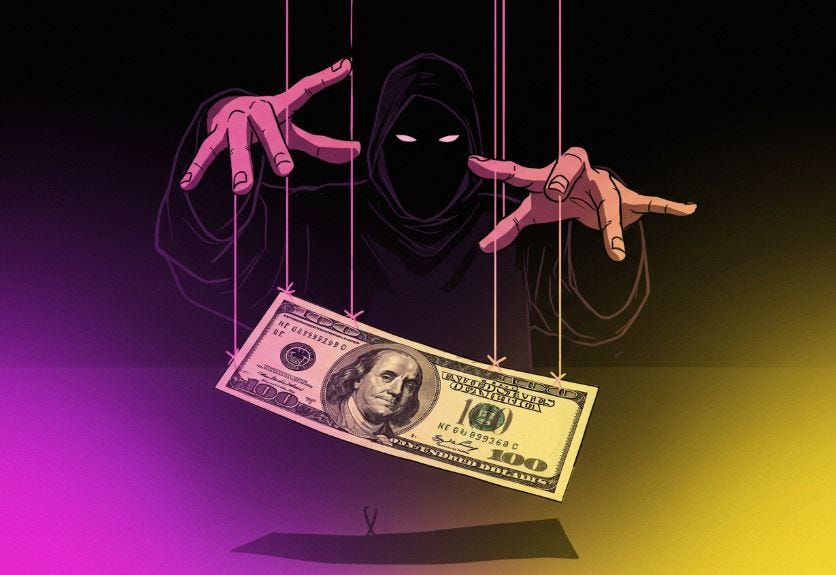
In a fully transparent system, your data has gravity because it attracts bad actors. If a hacker can see that a specific wallet address is active and holds significant assets, that individual becomes a target for phishing, $5 wrench attacks, or sophisticated social engineering.
By making privacy the default setting but keeping it optional, users can navigate the digital world under a cloak of mathematical silence. They only break that silence when they choose to engage in a specific transaction or interaction, drastically reducing their digital footprint and their profile as a target.
4. The Moral Superiority of Consent
True privacy is not just about hiding; it is about consent. If a system forces you to be private, it is a cage. If a system forces you to be public, it is a stage. Only when you have the option do you have agency.
Optional privacy systems, particularly those utilizing technologies like zk-SNARKs (Zero-Knowledge Succinct Non-Interactive Arguments of Knowledge), allow for the verification of truth without the exposure of data. You can prove you are over 18 without showing your birth date. You can prove you have sufficient funds without revealing your balance. This selective disclosure is the ultimate expression of digital consent.
5. Future-Proofing the Digital Economy
As we move toward a Web3-integrated world, our digital identities will carry more weight than ever. If every interaction is etched into a public ledger forever, we lose the right to be forgotten and the ability to evolve.
Optional privacy provides a buffer zone. It allows for commercial confidentiality. Businesses can use private blockchains for settlement without leaking their entire supply chain strategy or payroll to competitors. It also allows for personal safety.
Activists and journalists can operate in high-risk zones with the ability to go dark when necessary, while still having the option to verify their identity to trusted editors or legal counsel.
Conclusion
The “Best Privacy” is the one that serves the user, not the system. By championing optional privacy, we move away from the “Surveillance Capitalism” of the modern web and the “Dark Web” stigma of total anonymity.
We land instead in a balanced ecosystem where transparency is a tool, but privacy is the foundation. It is a world where you own your data, you control the “viewing” rights, and you, and only you, decide when it’s time to step into the light.
PIVX. Your Rights. Your Privacy. Your Choice.
To stay on top of PIVX news please visit PIVX.org and Discord.PIVX.org.