#4: Why Markets Move In Cycles
 The Systems Institute6 min read·1 hour ago
--
There’s a quote often misattributed to Mark Twain that refuses to die, probably because it keeps being true: “History doesn’t repeat itself, but it often rhymes.”
Anyone who has stared at a long-term chart of the stock market — really stared at it, past the squiggly noise of daily moves — has felt this. The collapses look different. The manias wear different costumes. The victims have different names and different excuses. But the shape? The shape is always the same.
Thanks for reading! Subscribe for free to receive new posts and support my work.
Boom. Euphoria. Crack. Despair. Recovery. Boom again.
If you’ve ever wondered why this keeps happening — why supposedly rational actors in the most information-saturated markets in human history keep making the same catastrophic mistakes in sequence — the answer is not complicated. But it is uncomfortable.
The cycle isn’t driven by the economy. It’s driven by people. And people are, at their emotional core, remarkably consistent.
The Economy Does Not Move In Cycles. Humans Do.
Let’s kill a myth first.
The popular explanation for market cycles involves the economy: expansion leads to overheating, overheating leads to recession, recession clears the excesses, and growth resumes. This is technically true in the same way that saying “fire is hot” is technically true. It tells you what but not why.
The deeper engine is psychology — specifically, the way human beings process uncertainty through narrative, and the way narratives become self-fulfilling.
Here is what actually happens:
When times are good, people do not simply feel good. They begin to believe that good times are the new normal. This is not stupidity. It is a cognitive shortcut the brain uses to reduce anxiety. If you had to re-examine your assumptions about the world every morning, you’d never get out of bed. So the brain pattern-matches. “Things have been okay for three years” becomes “things will probably keep being okay.” Economists call this “extrapolation bias.” Therapists might call it hope. Markets call it a bull run.
But here’s where it turns dangerous: once enough people believe the new normal is permanently good, they start acting on that belief. They take on debt. They buy assets at prices that only make sense if growth continues indefinitely. They stop stress-testing assumptions because stress-testing feels unnecessarily pessimistic. The very belief in the new normal creates conditions that make the new normal impossible to sustain.
And then something cracks.
It doesn’t even have to be a big crack. In 2007, it was a relatively small corner of the mortgage market — subprime loans, maybe 15% of total mortgage originations. But the crack revealed that the scaffolding underneath the whole beautiful structure was made of the same material: the unquestioned assumption that house prices would never, ever fall.
When that assumption broke, the narrative broke with it. And markets are narrative machines.
The Four Phases, Explained Without Jargon
Every major market cycle moves through four phases. Not always at the same speed. Not always with the same fuel. But always, in this order:
Phase 1: Disbelief
Markets have bottomed or are starting to climb, but most participants don’t trust it. The last crash is too fresh. Valuations look cheap, but cheap doesn’t feel safe — it feels like a trap. The investors who buy here are contrarians, value hunters, and people who’ve spent enough time in markets to know that the darkest sentiment usually precedes the best returns. Most people sit this phase out.
Phase 2: Acceptance
The recovery becomes undeniable. Earnings are up. Unemployment is falling. That fund you ignored is up 40% over two years. You start reading the bull case. You are not yet greedy, but you are curious. This is the longest phase, the one where the most wealth is created, and paradoxically, the one that feels the least exciting. Nothing dramatic is happening. Things are just… getting better.
Phase 3: Euphoria
This is the phase that kills people.
Price has now been rising long enough that it feels structural, not cyclical. Taxi drivers are talking about stocks. Your cousin who has never expressed interest in finance is asking you about crypto. Valuations that would have seemed absurd three years ago now have elaborate intellectual justifications — new paradigms, new metrics, new reasons why the old rules don’t apply. The people who said “this looks expensive” in Phase 2 have been proven wrong so many times that they have either capitulated or been publicly humiliated into silence.
The music is playing. Everyone is dancing. No one wants to be the person who walks off the floor.
Phase 4: Denial and Collapse
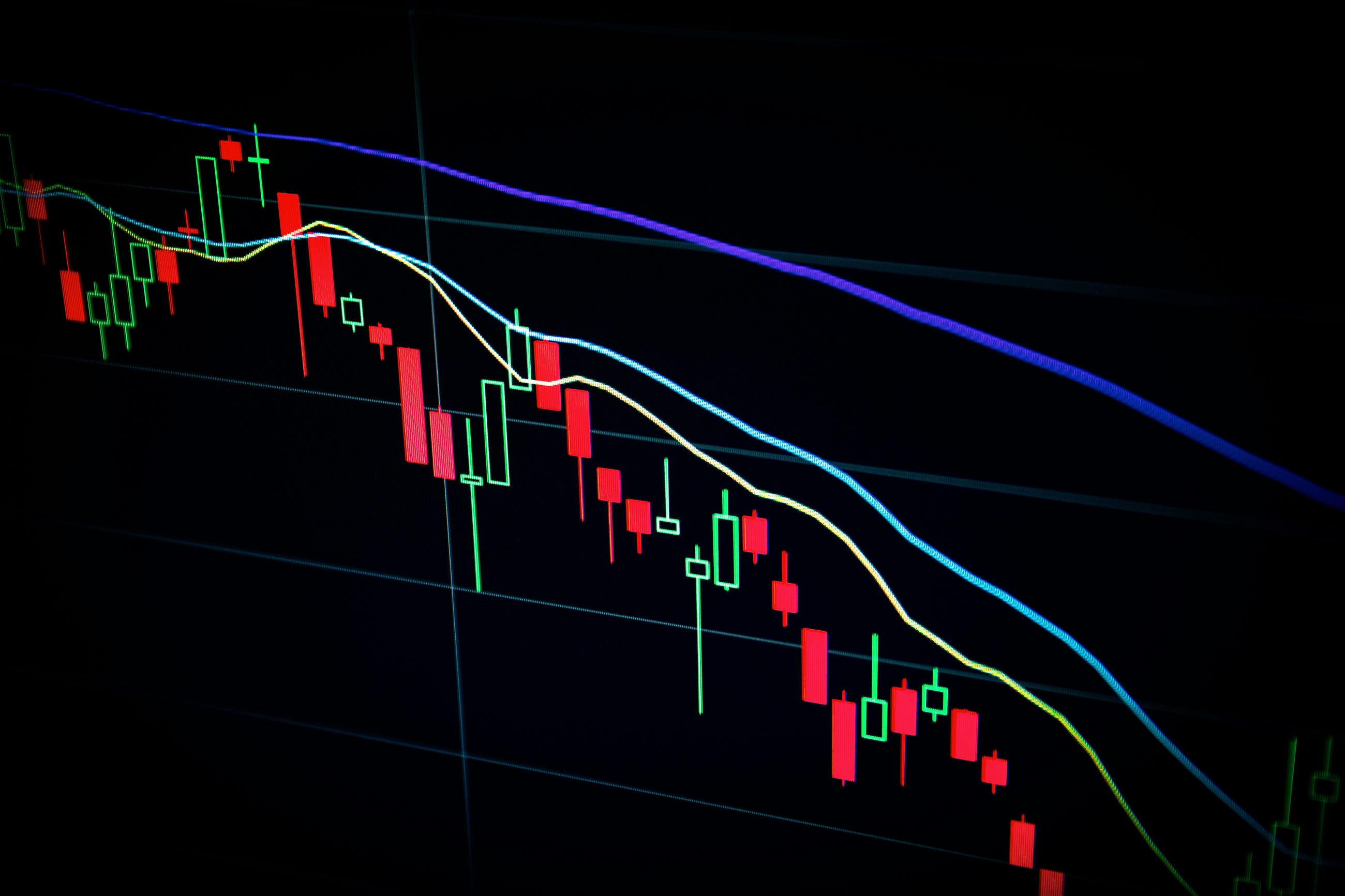
The first drops are bought. “This is a healthy correction.” The second drops are also bought. “The fundamentals are still strong.” The third drops are met with silence. And then, somewhere between the third and fourth major drop, the narrative flips completely. The same stories that justified buying at the top are now used to explain why the bottom isn’t the bottom. People who borrowed to buy are forced to sell. Margin calls create cascades. Panic is not irrational — it is rational given that everyone else is also panicking. This is what economists call a coordination problem, and it is merciless.
Why Smart People Don’t Escape the Cycle
At this point you might be thinking: okay, but I know this. So I’ll just sell at Phase 3 and buy at Phase 1.
Congratulations. You’ve just described the investment strategy of every person who has ever blown up their portfolio trying to time the market.
The reason cycles persist even as they are widely studied and documented is that the knowing does not neutralize the feeling. You can read every book Howard Marks has written about cycles — and you should, they’re excellent — and still feel the gravitational pull of euphoria when the market is making you feel like a genius every week. Knowledge is not a vaccine against emotion. It is, at best, a warning label.
There’s also a structural reason smart money can’t simply “escape” cycles: the incentive system of professional investing actively rewards riding the cycle up and punishes getting off early. A fund manager who calls the top 18 months early will underperform their benchmark for 18 months and lose clients. A fund manager who rides it to the top and crashes with everyone else can say “nobody saw this coming” and keep their job. The rational individual choice is to stay in the pool even when you suspect the water is getting too warm. This is how bubbles are sustained by people who know they’re bubbles.
What Cycles Are Actually Teaching Us
Here is the part most market commentary skips because it’s uncomfortable.
Cycles are not malfunctions. They are not errors in the system that better regulation or smarter algorithms will eventually correct. They are the natural output of a system made of human beings making decisions under uncertainty, using incomplete information, in competition with each other, all trying to guess what everyone else will do next.
The cycle is a feature. It is the market’s mechanism for reallocating capital from the over-optimistic to the patient. It is how excess gets wrung out. It is, as the economist Joseph Schumpeter argued, a form of creative destruction — painful, yes, but also necessary. The companies and business models that survive cycles are, almost by definition, built on something real.
What cycles teach — if you’re willing to learn — is a kind of epistemic humility that is extraordinarily difficult to maintain during good times. It is the discipline to ask, when everything is going well: what am I assuming that I haven’t examined? It is the capacity to hold two thoughts simultaneously: “this is working” and “this will not work forever.”
The investors who consistently navigate cycles well share one trait, and it is not IQ. It is the ability to be uncomfortable on purpose. To sell when selling feels unnecessary. To buy when buying feels dangerous. To sit in cash when sitting in cash feels like falling behind.
In other words: to be out of sync with the crowd, at precisely the moments when being in sync with the crowd feels best.
The Only Honest Conclusion
Markets will keep moving in cycles. The next one is already somewhere in its sequence — and depending on when you’re reading this, you are either in the forgetting phase or the remembering phase.
The question is never whether a cycle is happening. The question is always: where are you in it, and what are you doing with that knowledge?
The cycle does not care how sophisticated you are. It does not care how much you’ve read, how many recessions you’ve lived through, or how clearly you can articulate the warning signs. It cares only about one thing: what do you do when the music is loudest and everyone around you is dancing?
That question, asked and answered honestly, is worth more than any financial model.
If you found this useful, share it with someone who’s currently convinced we’re in “a new paradigm.” They probably need it more than they know.